Bad Behavior
Why We Root for Musical Theatre’s Worst People

During the last weekend of June, I saw two musicals that made me laugh out loud — and then left me wondering why.
Neither production took place in Philadelphia proper. One was at People’s Light, a respected suburban company in Malvern best known for its annual Christmas “panto,” a genre-defying hybrid of British holiday tradition and musical theatre mischief, complete with drag, slapstick, and rewired fairy tales. The other was over an hour north, on the bucolic campus of DeSales University, home to the Pennsylvania Shakespeare Festival. As the name suggests, they specialize in Shakespeare and other classics, but in recent years they’ve added a splashy summer musical to their repertoire to broaden their audience base.
This year’s choices? The Producers and Little Shop of Horrors.
Two shows I know well. Two shows that have long been considered part of the musical theatre canon. And two shows full — absolutely teeming — with bad behavior.
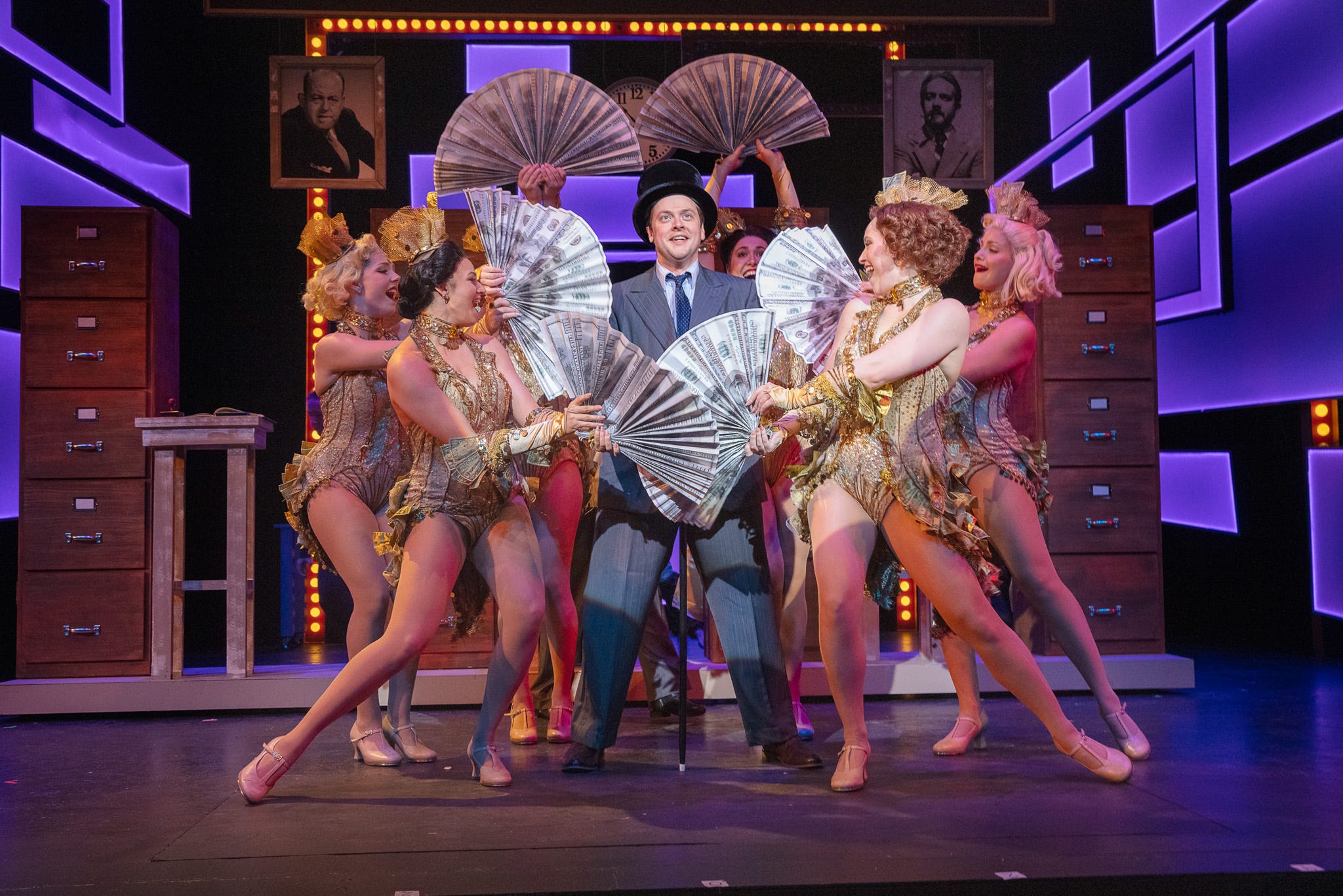
In The Producers, Max Bialystock seduces a chorus line of elderly widows in exchange for checks made out to “Cash.” He and his partner Leo Bloom conspire to stage the worst musical ever written, hoping it will flop so they can run off with the investors’ money. The show traffics in stereotypes — Jewish, queer, Nazi — that once seemed outrageous and now feel, at times, like they’ve aged uncomfortably.
Then there’s Little Shop, where Seymour Krelborn murders two people and feeds their bodies to a sentient carnivorous plant with Broadway ambitions. Sadism is a punchline. Blood is a visual motif. The whole thing is set to a bubbly, irresistible doo-wop score.
What struck me, watching these two shows back to back, wasn’t just how often the characters lie, cheat, steal, and kill. It was how much the audience loved them for it — and how easily I did too.
That left me wondering:
Why do musicals so often invite us to root for people who do awful things? And why do we so often say yes?
The Guilty Pleasures of The Producers
The Producers began life as a cult comedy film in 1967, the brainchild of Mel Brooks and starring Zero Mostel and Gene Wilder. It was loud, crude, and defiantly tasteless — a farce built around a pair of con men who try to get rich by creating the worst musical in history. The film didn’t make much money, but it gained a passionate following, especially among fans of Brooks’s brash, irreverent style.
More than three decades later, Brooks adapted it for the stage, collaborating with director-choreographer Susan Stroman to create a full-blown Broadway musical. With Nathan Lane and Matthew Broderick leading the charge, the show opened in 2001 and became a phenomenon — raking in record-breaking box office numbers and winning 12 Tony Awards, including Best Musical. It was the first mega-hit of the new millennium and a loving throwback to the days of tap-happy showbiz satire.
But watching The Producers in 2025, it’s hard not to wonder:
Has its comic voice passed its sell-by date?
The show’s premise — cheerfully fleecing little old ladies and staging a musical called Springtime for Hitler — was always designed to provoke. That’s the point: Brooks’s signature move is to take the unspeakable and make it sing. But jokes that once read as boundary-pushing now land differently, especially in a culture more alert to questions of power, representation, and harm.
Consider the gay-coded director Roger De Bris and his “common-law assistant” Carmen Ghia, played for broad, swishy laughs. Or the depiction of Bialystock as a sweaty, scheming Jewish producer with a taste for exploitation and cash. Or the idea that a musical about Hitler could be so flamboyantly offensive it would tank on opening night — a premise that seems more like wishful thinking than satire in an age when fascism is no longer safely confined to parody.
And yet.
The Producers still works. At least, it did on the night I saw it. The audience I was part of responded with consistent laughter and a standing ovation at the end. The songs are clever, the pacing tight, the choreography dazzling. And Max and Leo, for all their misdeeds, remain oddly lovable. Why? Because they’re losers — the oldest trick in the comedy handbook. They’re underdogs, desperate for a win, clinging to each other in the face of absurdity. Their crimes are cartoonish. Their remorse (eventually) sincere. The music, with its brassy Broadway flourishes and pastiche numbers, sells it all with a wink and a grin.
What makes the show dangerous — or at least worth interrogating — is how easily it pulls us in. We laugh, we root, we cheer. We forgive.
That’s the power of the musical: it can make even the most egregious behavior feel like a punchline — or a showstopper.
How Musicals Help Us Love Bad People
This isn’t accidental. Musical theatre has a whole arsenal of tools it uses to generate sympathy for even the worst-behaved characters:
Comic Framing: If it’s funny, it can’t be that bad. Farce defuses offense.
Empathic Exposition: Give us a backstory. Show us pain or failure. Let us understand.
Casting Charismatic Clowns: These roles are magnets for show-stealing performers who charm us against our better judgment.
The “I Want” Song: A longing solo turns a criminal into a dreamer. (I Wanna Be a Producer makes Leo’s complicity seem like a brave leap toward freedom.)
Musical Seduction: Songs like “’Til Him” (Max and Leo’s sentimental courtroom duet) bypass our moral reasoning and go straight to the heart.
Stylized Distance: Caricature protects us. When things aren’t too real, we feel freer to laugh.
The Promise of Redemption: Max and Leo are punished — briefly. They come back for the finale. All is forgiven.
These techniques combine to make us complicit. We don’t just forgive bad behavior — we enjoy it.
From Skid Row to the Flower Shop of Horrors
The “I Want” song is one of musical theatre’s most reliable empathy machines. Leo Bloom dreams of Broadway. Seymour Krelborn dreams of getting out of Skid Row.
“Skid Row (Downtown)” is a working-class lament in the style of a street-corner fugue — raw, bluesy, and full of longing. When Seymour sings, “Someone show me a way to get outta here,” we’re not thinking about what he might do next. We’re rooting for his escape.
And when opportunity arrives — in the form of a mysterious, bloodthirsty plant — we barely blink. A drop of blood, then a whole finger, then a corpse. But Seymour’s circumstances are so dire, his awkwardness so relatable, and the music so catchy, we follow him into moral territory we’d likely never accept in another context.
Orin Scrivello, DDS, is engineered to make Seymour’s first murder palatable. In the production I saw, Orin’s abuse of Audrey was brutal and deeply unsettling. He slaps her, mocks her, takes visible pleasure in her pain. His song “Dentist!” is a high-octane confession of cruelty. By the time Seymour allows the plant to devour him, it feels like justice — a darkly comic payback.
And yet, Seymour goes on. He kills again. He lies to Audrey. But our investment holds. Why? Because Little Shop never lets go of its musical buoyancy. Because Seymour is still, in some twisted way, chasing the same dream he sang about in act one.
That dream is shared by Audrey, who yearns for a quiet life “Somewhere That’s Green.” A tract home. A toaster. A washer and dryer. Her dreams are modest and sincere — a stark contrast to the extravagant, grotesque promises of Audrey II. That contrast deepens the pathos: we know what Seymour could have chosen, and we feel the loss even as we’re swept up in the madness.
Bad Behavior as a Tradition: From Assassins to Carousel
This moral murkiness isn’t new. It’s a throughline in musical theatre — especially in the work of Stephen Sondheim.
I have a personal connection to Assassins: it was my idea that first inspired Sondheim and John Weidman to explore the lives of America’s presidential assassins and would-be killers. Assassins refuses to treat these figures as cartoon villains. In songs like “The Ballad of Booth,” Sondheim crafts melodies of aching beauty (“The country is not what it was”) that almost make us feel for Booth’s disillusionment — before jolting us with the full horror of his racism (“that vulgar, high-and-mighty nigger-lover”).
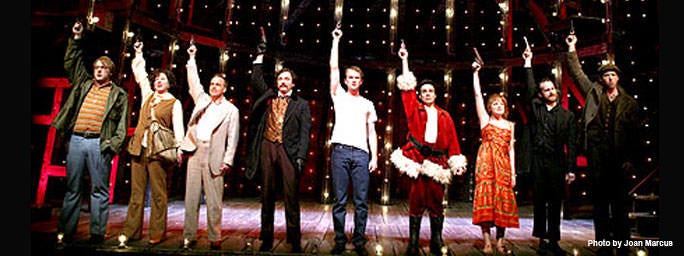
Sweeney Todd works a similar magic. We recoil at Sweeney’s vengeful murders and cannibalistic pies, yet the grandeur of the music and the tragedy of his backstory draw us in. Sondheim forces us to see the humanity in his monsters, and the monstrousness in ourselves.
Even Carousel, from Sondheim’s mentor Oscar Hammerstein, turns the abusive Billy Bigelow into a romantic hero. His violence is never excused, but the show bends toward understanding and forgiveness, asking us to feel for a man whose flaws destroy him.
Lawless and the Enduring Appeal of the Complicated Man
My own creative work brings this paradox into sharp relief. In Lawless, my new musical about Charles Dickens and his relationship with Ellen Ternan, I explore a man who was not just a charming rogue, but also a figure who could be seen as a predatory male — grooming and exploiting a much younger mistress. Dickens went to great lengths to conceal this relationship from the public, fully aware that he would be judged harshly for it.
Through the music and story, I aim to reveal the complexity of a man who inspired admiration and love, yet whose actions invite serious moral scrutiny. Like the characters in The Producers or Little Shop, Dickens’s contradictions demand that we hold mixed feelings: to be fascinated, disturbed, and empathetic all at once.
This creative journey reminds me why musicals matter: they offer a unique space to grapple with human complexity, to question easy judgments, and to find emotional truth even amid moral ambiguity. In telling stories like Dickens’s, musicals challenge us to understand the messy, often uncomfortable realities behind charisma and fame — and in doing so, deepen our capacity for empathy.
Why Musicals Matter
As someone actively engaged in creating new musicals, I feel a profound excitement about this power — the power to tell stories that challenge us, move us, and ultimately connect us. Musicals matter because they give voice to the full spectrum of human behavior, from the noble to the ignoble, and invite us into a shared experience of empathy and understanding. It is this complexity that keeps the art form vital, urgent, and endlessly fascinating. And it is why I, like many audience members last weekend, will keep coming back to the theatre to laugh, to cringe, and to sing along with the very best of bad behavior.
If you’ve enjoyed this piece, I invite you to subscribe to my Substack. I write about musical theatre — its craft, its history, its impact, and its future — drawing on decades of experience as a writer, director, teacher, and passionate audience member. You’ll find reflections on classic shows, responses to new work, insights into the creative process, and glimpses into projects I’m currently developing, like Lawless. Whether you’re a fellow creator, a curious fan, or someone who simply believes musicals matter, I hope you’ll explore the archive and join the conversation.