Refusals and Revelations
What 2025 Taught Me About Musical Theater

I. The Question the Year Posed
“How do you measure a year in the life?” Jonathan Larson asks in “Seasons of Love” from Rent.
As part of my end-of-year review, I made a list of all the musical theater experiences I had in 2025. I make no claims for seeing everything. I pick and choose, like everyone does. But still, I think I’m a fairly active theater-goer, compared to most.
When I compiled the list, I was startled. Thirty theatrical experiences. More than half new work—premieres, workshops, developmental readings. Almost no Broadway in person. Many accessed through technology: National Theatre At Home, cast recordings, streaming. Multiple student productions. Several MusiCoLab shows. And threading through it all, work that challenged, provoked, and refused conventional theatrical comfort.
I know Rent inside and out—I saw the original Broadway production in previews in the ‘90s, and I’ve taught it for three decades. But this year, Larson’s question hit me different. How do you measure a year in the life of the musical theater?
2025 was the year I discovered that the most vital work in musical theater is happening in the spaces where conventional contracts are being renegotiated—or refused entirely.
I investigated where meaning lives when conventional tools for meaning-making are removed, refused, or reimagined. I encountered peak institutional excellence demanding new modes of attention. I participated in developmental processes where “finished” was never the goal. I watched canonical shows reimagined through contemporary lenses. I experienced moments of transcendence in work so formally adventurous that optimal reception felt rare and precious.
The shows I saw fell into three categories, each representing a different kind of refusal: formal, commercial, and canonical. Together, they map a landscape of musical theater that looks nothing like the Broadway-centric narrative we’re often sold. It’s messier, more diverse, more experimental, and more alive than any single ecosystem could contain.
II. Formal Refusal: When the Contract Is Broken
Some musicals ask you to lean back. These demand that you lean in.
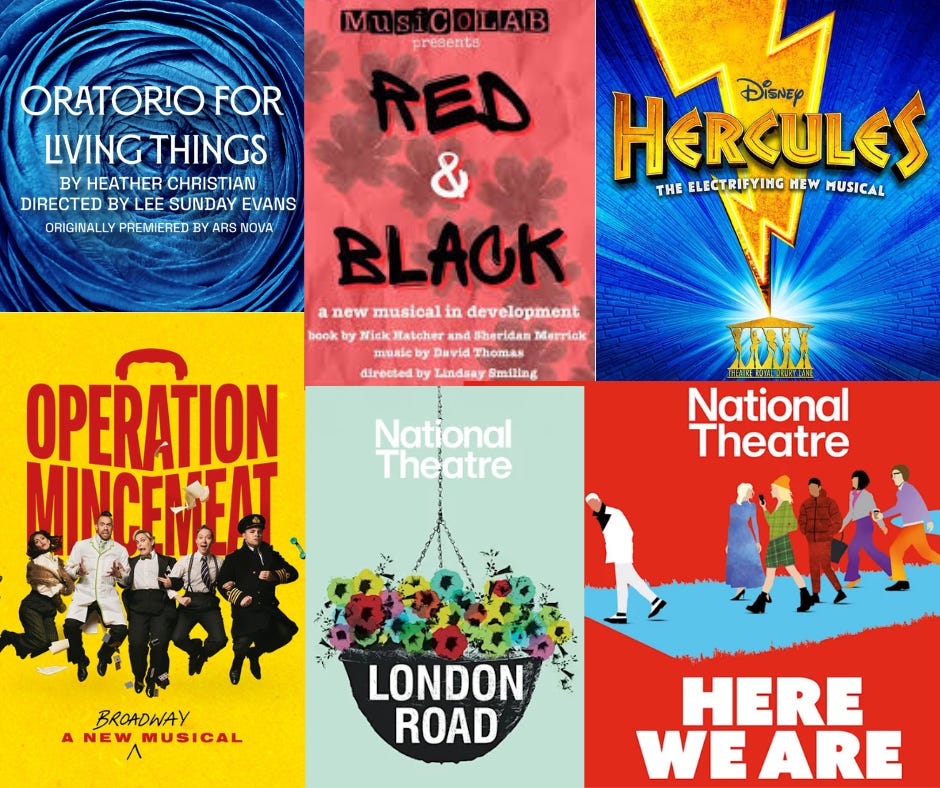
I’ve written extensively about shows that exemplified formal refusal—work deliberately abandoning conventional narrative, comprehensibility, or emotional contracts. London Road and Here We Are at the National Theatre. Oratorio for Living Things at Signature Theater. Each insisted that meaning could live somewhere other than in clear lyrics, linear storytelling, or familiar emotional throughlines.
London Road sculpts melodies directly from recorded interviews about the Ipswich murders. Rising inflections, repeated words, syntactic stumbles—all preserved with forensic care. The result mirrors the anxious circularity of townspeople’s thoughts but refuses to editorialize. A phrase like “It’s a wicked, wicked world we live in” becomes a melodic motif, emotionally refracted across a choral texture. The same voices lamenting lost safety also express distrust of sex workers and relish media attention. The music doesn’t tell us what to think—it listens, revealing contradictions beneath the surface.
Here We Are, Sondheim’s final work, offers surrealist disruption. Based on Buñuel films, it skewers bourgeois rituals while upending narrative logic. The first act builds around friends who cannot find a place to dine—each location compromised. Musically, Sondheim responds with interruptions: songs that don’t resolve, ensembles that refuse to cohere, cadences that slip sideways. In the second act, when guests find themselves trapped in a room, the musical language becomes spare, haunted, hollowed-out. Sondheim at his most Beckettian—reduced, distilled, essential.
Oratorio for Living Things took formal refusal to its radical extreme. For twenty minutes, I couldn’t make out a single word. Text in Latin, vocal lines overlapping in intricate counterpoint. No narrative, no clear throughline, no character to identify with.
Yet meaning happened through performers’ embodied investment—how they looked at each other, moved, modulated tone. When my former student Kirstyn Ballard sang “These thoughts of mine are VIOLENT” with true vocal and physical violence, I didn’t need context to understand completely. Meaning lived not in words but in the integration of voice, body, intention, and emotional truth—exactly what my SAVI methodology articulates.
This formal refusal isn’t new. I’ve been writing about Gertrude Stein’s contribution to musical theater—work anticipating, by decades, these contemporary strategies. Stein’s Four Saints in Three Acts (1934) deliberately refuses narrative coherence, character psychology, semantic clarity. The text operates as sound, rhythm, incantation. She understood that language in sung theater doesn’t have to mean conventionally to create powerful theatrical experience.
These formally adventurous works teach us that meaning lives in form itself, not in spite of form. When a show refuses conventional comprehensibility, it’s asking us to attend differently—to sonic architecture, embodied performance, ritual structure. To experience theater not as narrative delivery but as transformation.
III. Commercial Refusal: Where the Future Is Being Built
While experiencing peak formal innovation, most of my 2025 theatrical life happened elsewhere: in the developmental ecosystem where new musicals are made.
More than half the shows I saw were new work in development. Workshops. Readings. Premieres. Three shows at NAMT in 45-minute excerpts. Two Temple MFA student premieres. Multiple MusiCoLab shows. And The Carols, where I music directed a one-week workshop preparing for off-Broadway.
These represent commercial refusal—refusing the pressure to be finished, safe, commercially viable. Refusing the Broadway model demanding shows arrive fully formed and investor-ready. Embracing messy, essential discovery.
This is where the future is actually built. Not in Times Square, but in black boxes, college auditoriums, rehearsal studios where the goal isn’t polished product but honest investigation.
Consider the range: Ink and Paint, Girl Dolls, Ballad of King Henry, Red & Black, Cool At Camp—all part of a Philadelphia ecosystem where artists create opportunities for each other, build infrastructure, refuse to wait for commercial gatekeepers’ permission.
Temple’s Goblin Market and Mystic Rapture—full-length originals by MFA writers developing their craft. Wishing To Grow Up Brightly, commissioned by Theater Horizon with foundation support. Hard Road To Heaven at Bucks County Playhouse.
Then Philadelphia Theatre Company produced two new musicals—an extraordinary institutional commitment. Night Side Songs, co-produced with American Repertory Theater, premiered in hospital settings before a full production, drawing from interviews with real caregivers. It transcended performance to become collective empathy, resonating with hospital staff, moving audiences to tears. Now it’s headed to Lincoln Center Theater. Small Ball, supported by 76ers GM Daryl Morey’s passionate patronage, arrived after Houston and Denver productions—an offbeat musical about a six-inch-tall basketball team. Two different models: institutional partnership versus individual champion. Both creating opportunities that wouldn’t otherwise exist.
This ecosystem doesn’t operate on commercial logic. Shows are developed because artists believe in them, institutions commit resources, communities build infrastructure.
As music director for The Carols, I was inside the process. I heard the score evolve. Watched actors discover moments. Saw bold choices tested and adjusted. We presented not a polished show but work-in-progress—a glimpse of what this piece might become.
Success here looks different. It’s the MFA student completing their first full-length musical. The regional theater taking risks on commissions. The community supporting each other’s readings. The work itself getting better—more truthful, more specific, more itself.
This is where I actually live theatrically. I’m not primarily consuming finished Broadway product. I’m music directing workshops, programming MusiCoLab, teaching students writing first musicals, inside the process.
The future of musical theater is being built in patient, unglamorous, essential work that refuses commercial pressure. Excellence lives not just in polished final products but in the process itself—the courage to try, the willingness to revise, the community supporting work through multiple iterations.
IV. Canonical Refusal: Reimagining What We Thought We Knew
Not everything was new. I saw classics I’ve known for decades: The Producers, Little Shop of Horrors, Rent, Falsettos, Merrily We Roll Along.
But even here, I encountered canonical refusal—theaters refusing to reproduce shows as museum pieces, instead reimagining through contemporary lenses.
Little Shop of Horrors at People’s Light was reimagined through “a lesbian lens”—interrogating gender dynamics, assumptions about desire and power, making the show’s queer undertones explicit and central. This is canonical refusal: taking a well-known work and refusing to accept “traditional” interpretation as the only valid one. Regional theaters can take these risks—they’re not burdened by Broadway’s commercial pressures. When it works, it reminds us these texts are alive, still capable of meaning differently.
The Producers at Pennsylvania Shakespeare Festival raised uncomfortable questions. Has its comic voice passed its sell-by date? The premise—fleecing little old ladies, staging Springtime for Hitler—was always provocative. But jokes that once felt boundary-pushing now land differently. The production was strong, but the show revealed its age. Not canonical refusal through reimagining, but time itself reframing the work.
Then straightforward, lovingly executed revivals: Rent and Falsettos at the Arden Theatre. These weren’t reimagined—they were presented with care, craft, respect for original vision. There’s genuine value in keeping shows alive in repertoire, letting new audiences discover why they mattered.
Merrily We Roll Along via pro-capture showed a different canonical refusal: refusing to accept a show is “done” just because it’s been produced. Forty-plus years of patient revision until this production finally cracked the show’s problems. Sometimes the refusal isn’t about reimagining through a new lens—it’s refusing to stop working until you find the production the show always deserved.
Even Hercules—which I saw in previews at the Theatre Royal Drury Lane, a high-gloss, high-stakes West End premiere in one of London's most historic theaters—occupies an interesting position, somewhere between new musical development and re-imagining the IP of a hit movie. On the surface, this is peak commercial theater: Disney mounting a lavish production of one of its beloved animated properties, aiming to take its place alongside The Lion King and Frozen as a blockbuster stage musical. But viewed from another angle, Hercules is just the next step in a long developmental journey. It began years ago as a Public Works production at the Delacorte Theatre in Central Park—a community-centered presentation pairing professional actors with hundreds of volunteers. From there, it moved to Hamburg for a commercial run at a prestigious German venue, iterating and refining. What I witnessed in London was still a work-in-progress, still discovering what it wanted to be. Even billion-dollar corporations developing guaranteed-IP musicals participate in the same patient, multi-year developmental process that shapes smaller shows. The scale is different, the resources vastly greater, but the fundamental work—test, revise, test again—remains the same.
Even established work must be continually renegotiated with contemporary audiences. The canon isn’t a museum. It’s a living conversation.
V. Operation Mincemeat: When Refusal Becomes Success
And then there was Operation Mincemeat.
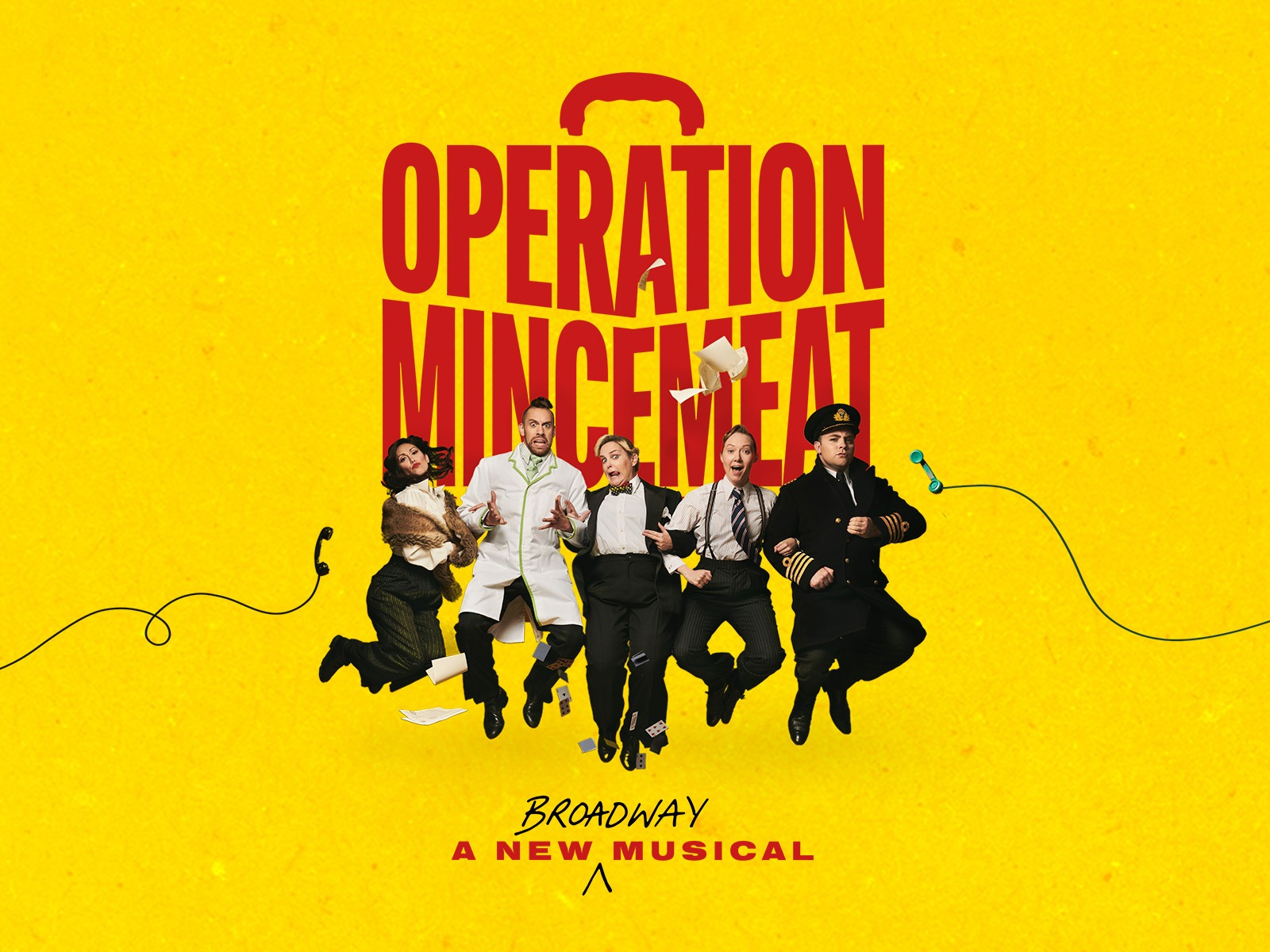
This rare work embodies all three refusals simultaneously. And improbably, it’s also a hit.
This show inspired my work on Lawless. It proved experimental form and commercial success aren’t mutually exclusive. It made me believe you can refuse every conventional rule and still create something audiences love.
Created by British collective SpitLip, it found footing at Edinburgh Fringe, then made an unlikely journey to West End to Broadway, propelled by passionate “Mincefluencers.”
The show tells the true WWII deception story but does so gloriously unconventionally. Five performers play dozens of roles with gender-bending fluidity and Protean shapeshifting. Costume changes happen in full view. The pleasure is in visible artifice, shameless theatricality.
Tone shifts violently without warning. Broad physical comedy, then genuinely moving ballads about loneliness of espionage, then crude jokes, then sharp political satire, then fourth-wall breaks commenting on its own choices. Tonal whiplash is constant, deliberate, thrilling.
Structurally, it refuses linear storytelling. Doubles back, interrupts its own narrative, acknowledges audiences directly, treats history as raw material for irreverent invention while never losing human stakes.
This is formal refusal at its most playful and confident. It trusts audiences don’t need conventional emotional throughlines or naturalistic character development.
It represents commercial refusal in origins—SpitLip created it as a collective, workshopping through Fringe runs where success meant selling out 100 seats, not recouping millions.
And it embodies canonical refusal—refusing the canon’s assumptions about what successful musicals look like. You don’t need a star, linear plot, emotional realism, tonal consistency.
What makes it inspiring: it proves audiences will meet you there. If work is good enough, confident enough, joyful enough in its vision, audiences don’t need conventional supports.
I saw it on Broadway. The audience was electric. Howling with laughter, moved to tears, completely engaged when—especially when—the show did something unexpected. A palpable sense of discovering something genuinely new.
This is what I’m chasing with Lawless. Not imitation, but permission to pursue structural playfulness, tonal shifts, meta-theatrical devices, anachronism, creative irreverence without worrying audiences won’t follow.
The show’s success proves something vital: there’s a broad, enthusiastic audience for work that refuses conventional formulas. This kind of success changes what’s possible, opens doors for unconventional work, gives artists permission to trust their strangest instincts.
VI. Where Excellence Lives: Revelations from a Year of Refusals
“How do you measure a year in the life?”
You measure it by recognizing patterns. By discovering your theatrical year—thirty experiences across multiple ecosystems—was actually a sustained investigation into: Where does excellence live when conventional contracts are broken?
The answer: everywhere and nowhere. Excellence lives in the National Theatre’s London Road, in a Philadelphia workshop of The Carols, in Kirstyn Ballard’s embodied investment in Oratorio, in SpitLip’s joyful Operation Mincemeat, in the Temple student completing their first full-length musical.
Excellence isn’t a single location or standard. It’s a quality of attention, commitment, and courage emerging anywhere artists refuse the easy path and pursue what the work needs.
I have a unique vantage point, inhabiting multiple theatrical worlds simultaneously: peak international theater, developmental ecosystem, regional professional theater, community productions, my own creative practice. That movement creates stereoscopic vision—I see things invisible from a single perspective.
From that vantage: the health of the art form doesn’t depend on Broadway hits or institutional prestige. It depends on the entire ecosystem functioning together. Peak excellence expands what’s possible. Commercial successes prove innovation and accessibility aren’t opposites. Regional theaters keep canonical work alive while sometimes reimagining boldly. And the developmental ecosystem builds the future one patient iteration at a time.
I’m not just observing—I’m part of it. Music directing workshops. Running MusiCoLab, now beginning its fourth year as an official nonprofit. Teaching students. Working on Lawless, applying everything learned about structural playfulness, creative anachronism, trusting audiences.
This dual position—participant and observer—gives both authority and humility. Authority because I understand work from inside. Humility because I see how much happens that never gets written about, never enters broader conversation.
The two Temple premieres won’t be in “best of” lists. Won’t transfer to Broadway. But they mattered enormously—giving emerging writers experience of hearing work fully staged, employing performers learning to originate roles, demonstrating new musicals can be made here, now, by people like us.
I don’t teach at Temple, but I know these students through my work at University of the Arts and MusiCoLab. This is how the Philadelphia ecosystem functions—overlapping networks, shared resources, artists supporting each other’s work across institutional boundaries.
MusiCoLab has supported work that wouldn’t otherwise have happened. Some has moved to larger productions. Some remains small-scale. All has mattered to artists who made it and audiences who experienced it.
And Lawless—my own risk—is being built through this same patient developmental process. What 2025 gave me was permission. Permission to trust my strangest instincts, pursue tonal shifts and meta-theatrical devices without worrying audiences won’t follow. Permission to believe formal innovation can be a conduit for emotional connection.
On Signature Theater’s wall, I read Simone Weil’s words: “Time’s violence rends the soul; by the rent eternity enters.”
That quote stayed with me all year. What I’ve been witnessing—in formally adventurous work, in developmental ecosystem, in reimagined canonical productions—is exactly this: the soul being rent open. Conventional contracts broken. Comfortable assumptions challenged. Easy paths refused.
And through those rents, something like eternity enters. The possibility of transformation, genuine surprise, encountering work that changes how you think and feel and see.
Not every show achieved that. Some were merely good, some frustrating, some left me cold. But enough broke through—enough created genuine transcendence—that I know it’s possible. Musical theater, when artists have courage to refuse conventional limitations, can still shake us, move us, wake us up.
This is hard-won hope. Not naive optimism about the industry or commercial viability of experimental work. Hope grounded in actual experience, concrete evidence that work is happening, artists are making it, audiences are showing up, the ecosystem is functioning even when underfunded and underrecognized.
I measure this year by what it taught me about where I belong, what I have to contribute, and what’s possible when we refuse limitations.
I belong in multiple worlds at once. That’s not scattered attention—it’s coherent artistic practice valuing the entire ecosystem.
What I contribute is stereoscopic vision, recognizing excellence in unexpected places, articulating what makes work succeed when it refuses conventional rules.
And what’s possible—the hope I carry into 2026—is more than we often imagine. More formal innovation that connects emotionally. More developmental processes prioritizing artistic vision. More regional theaters taking bold risks. More students writing first musicals and seeing them staged. More artists building infrastructure themselves.
More work like Operation Mincemeat proving audiences will meet you there. More work like Oratorio expanding what a musical can be. More work like MusiCoLab shows creating opportunities for local artists. More work like Lawless—still finding itself—daring to pursue its own vision.
The future of musical theater isn’t being built on Broadway, though Broadway matters. It’s being built in margins, in developmental spaces, in patient work of artists who believe in something beyond commercial success. Built by people who refuse conventional contracts and trust that refusal can lead to revelation.
This year taught me I’m part of that future. Not just as observer, but as maker. That’s the best measure of a year in the life: recognizing you’re not just watching the art form evolve—you’re helping to build what comes next.
In daylights, in sunsets, in workshops and readings and premieres. In refusals and revelations. In the messy, essential work of making musicals matter.
That’s how I measure 2025. And that’s how I’ll measure the years to come.
Very interesting! I loved several musicals last year - but it’s Benjamin Button that I think about the most.